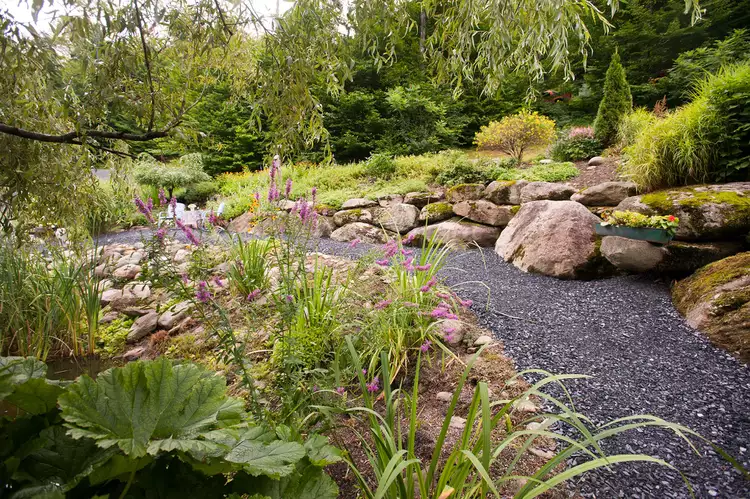
Also known as a “rockery,” a rock garden makes a beautiful addition to the landscape. Whether you’re faced with steep slopes, poor soils, or just looking to add a focal point, rock gardens are a DIY project that’ll add character and value to your yard. This guide will take you through the process of planning and designing your own rock garden, including how to choose a particular style, the types of rocks, maintenance tips, and selecting rock garden plants.
What is a rock garden?
The term “rock garden” is often used to describe a number of landscape design themes including somewhat standard gardens with a number of rocks dotted in the landscape, scree and alpine gardens with their rugged, mountainous feel, and even Japanese style rock gardens with their stark look that typically include only a few, often well-manicured plants.
Whatever the style, the overarching theme is a prominence of rock, plant, and simple design. This article will focus on the standard rock garden design that prominently features boulders, rocks, stones, and gravel accentuated by low-growing plants to maximize the space without drowning out the central rock garden theme.
Rock Garden Styles
However you choose to define your own rock garden, it is important to get a good feel for what you actually want before you begin digging. With so many styles, design elements often get mixed and although they might easily compliment each other, a garden design without focus can look jumbled and haphazard.
Non-Specific Rock Garden
Perhaps the most common type of rock garden is one that doesn’t follow any particular theme, but uses rocks heavily and prominently in the design. These gardens are most often included as a portion of a larger garden and somewhat confusingly referred to as “rock gardens” due to the prevalence of rocks, rather than following a specific look. Non-specific rock gardens look good paired with many garden and house styles.
Japanese Rock Garden
The next most common rock garden that comes to peoples’ minds is the Japanese-style rock garden. Also known as “zen gardens,” these Japanese gardens follow very specific design elements anchored in traditional Japanese beliefs. Japanese rock gardens are sometimes known as “dry gardens” as they typically use very few (if any) plants to highlight simplicity and serve as an aid in meditation. Japanese rock gardens fit well with modern and mid-century houses.
Alpine Rock Garden
Another common rock garden design featured heavily in botanical gardens in the United States and Europe is the alpine garden or “alpinarium.” Designed and built to grow plants found in high mountain areas, these gardens often incorporate and feature large upright slabs, coarse gravel, and boulders intended to mimic the naturally barren landscape in mountainous regions. Plant selections intended for alpine gardens are typically low, sprawling plants that require very little actual soil and tend to be very drought and cold tolerant. Alpine gardens look great with modern and prairie style homes.
Xeriscape Rock Garden
Finally, xeriscaping, which typically include large amounts of rocks and gravel, are sometimes referred to as rock gardens. The word “xeriscape” was coined in the 1980s to describe a dry landscape like those found in deserts or other arid regions and very popular in the Southwest, West Coast, and Great Basin regions.
Tips for Choosing Rocks to Use In a Rock Garden
After defining the style of rock garden you’d like to create, the next point to consider should be around sourcing the rocks, gravel, and stones. Local landscaping companies and larger nurseries are a good place to start. Be sure to check out in person any products you might wish to add to your home as there is often a great deal of variation among batches. Where possible, ask for a representative to visit your future rockery site and give estimates for the various products they have available.
Just as there are many styles of rock gardens, there are just as many types of rocks to choose and getting the right look is heavily tied to getting the right mix of colors, shapes, and sizes. For an authentic look that avoids clashing with the surrounding landscape and home, take note of the existing color palette. Does your landscape already have exposed rocks? Does your home incorporate brick or stone? Do you see more shades of red and purple or yellow and white?
Weed Barriers: Fabric vs. Gravel
Depending on the style and size of your rock garden, you may want to consider either a fabric or natural gravel weed barrier. Specifically when working with xeriscape gardens and Japanese rock gardens where a more barren look is preferred, a weed barrier will be necessary to cut back on weeding.
The most common barrier in use today is landscape fabric. Typically composed of various plastics, polyester, recycled materials, or even linen, these weed barriers allow water to penetrate into the soil but block weed growth. Originally designed to be replaced annually or semi-annually, only highly durable, non-decomposable fabrics should be used in your rock garden to avoid future replacement.
Another option found in many rock gardens is the use of a thick layer of sand and/or gravel. Alpine, xeriscape, Japanese, and gravel gardens often use upwards of 6 inches of inorganic fill to create a water-permeable barrier too thick for most seeds to grow. The addition of rock, sand, and gravel as a weed barrier does increase the price of installation, but is relatively permanent and low-maintenance.
When working on slopes, there is a risk of creating soil erosion issues. Pay close attention to the way rainwater moves across the site so that any changes to the site during construction do not create future erosion or drainage issues for you or your neighbors.
Rock Garden Soil
If you haven’t taken the soil condition into consideration at this point, make sure to do so well before any rocks have been placed. Many alpine and arid region plants thrive in rocky, gravelly, or even sandy soils, which should be taken into consideration before planting. Depending on the rock garden style and plants you wish to include in your design, adjust your soil's fertility, permeability, composition, and overall topography as needed.
Best Types of Plants for Rock Gardens
Once the hardscape (rocks, gravel, stone, weed barrier, etc.) has been installed and the soil has been appropriately amended, you can start planting your rock garden. Various styles of rock gardens tend to focus on specific types of plants, such as those native to high mountain regions or cacti and succulents native to arid regions. Even Japanese rock gardens have various plants that are often used, such as conifers, Japanese maples, mosses, ferns, bamboo, and boxwood.
The decision of which plants to include (or not include) is important because it will greatly affect future maintenance. But overall, rock garden plants are typically low-growing, low-maintenance, and drought tolerant.