How to Use Landscape Fabric to Control Weeds

28.6K
2.3K
434
OOlivia Reed
2025-10-25
How to Use Landscape Fabric to Control Weeds

Landscape fabric seems like the perfect solution for blocking weeds from popping up in your garden. It lasts a long time, can be easily trimmed to fit any size of space, and is relatively inexpensive. But even though this fabric is used throughout yards across the country, few homeowners know how to use it properly. Here's what you need to know about the best practices for when and how to use landscape fabric, plus essential maintenance tips. And if fabric isn't the best choice for your situation, there are a few alternatives to consider as well.

Also called weed barrier or weed control fabric, landscape fabric is usually used to discourage weeds while allowing for movement of moisture both in and out of the soil. However, it isn't a permanent solution to controlling weeds (nature will find a way). Even when using landscape fabric, you'll still need to do some weeding.

Where to Use Landscape Fabric

It's best to use landscape fabric under inorganic materials such as rock, gravel, or sand. Landscape fabrics are less effective when used under organic mulch such as wood chips or bark. As this mulch decomposes, it effectively creates a new layer of soil above the landscape fabric. Before long, weeds seeds will germinate and send roots through the fabric itself, making those weeds more difficult to uproot. That said, if leaves and other plant debris are allowed to collect on top of inorganic materials like gravel, the tiny pockets of soil that result can also be enough to give weeds a foothold.

If you're thinking about using landscape fabric over existing weeds and grass to smother it, this is not recommended. The area you want to cover should be stripped of all vegetation first to avoid tough weeds from poking through the material. Once holes have been opened in the fabric, they create an opportunity for more weed to become established.

Landscape fabric has limited use in annual and perennial gardens where you would want to be doing a lot of digging and adding soil amendments like compost. It's easiest to use in places where you don't want anything to grow, such as under a deck or landscape pavers. You could also use it in smaller areas, such as around a tree, where you intend to rip up the fabric and replace it every couple of years.

How to Install Landscape Fabric

Made from a variety of organic, synthetic, and recycled materials, most types of landscape fabric can last several years. Weed barrier comes in a variety of thicknesses and durability, so care should be taken when deciding which is right for your intended use. To avoid common problems and make the best use of the product, here's how to correctly install landscape fabric.

Step 1: Prepare the Soil

Landscape fabrics should be applied on bare soil so all weeds and other vegetation should be removed if necessary. If the area will be planted, mix in any desired fertilizers, compost, and other soil amendments. Then, level out the soil to avoid holes and divots that may accumulate water and cause drainage issues.

Step 2: Lay Out the Fabric

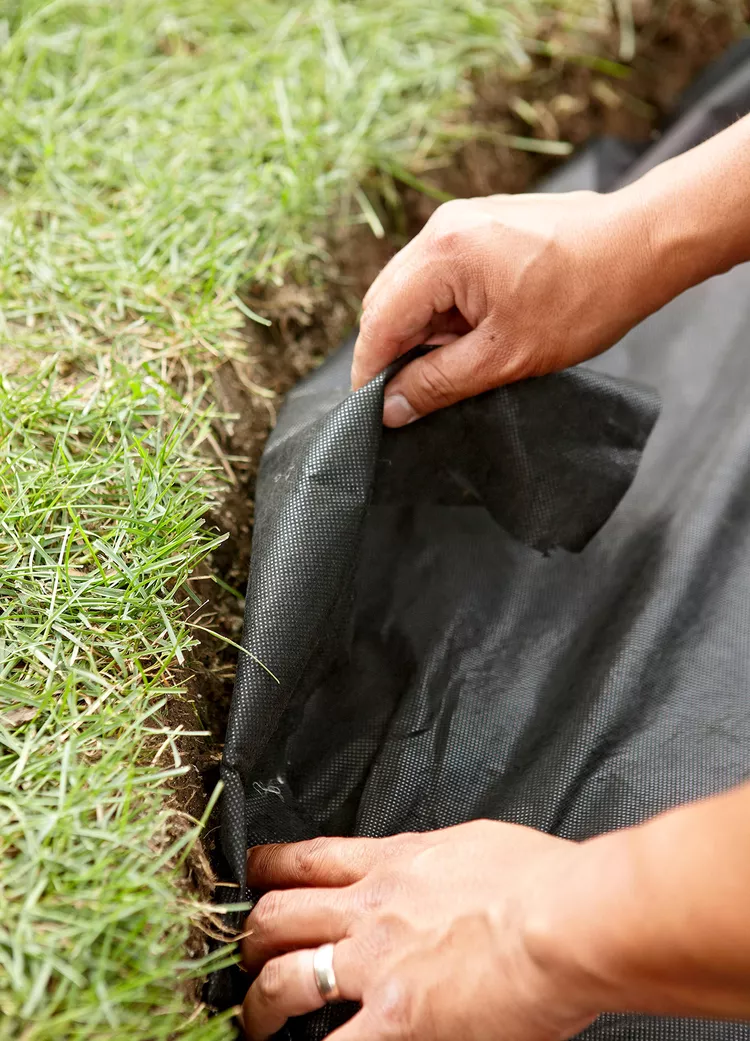
After the area has been prepped, measure out the amount of fabric you'll need to cover it. Make sure to allow a few inches of overhang on all sides. Lay the fabric onto the soil surface so that the edges of the pieces overlap each other by 6-8 inches. This will prevent weeds from growing through the seams and allow for a little movement.

Step 3: Secure to the Ground

One of the biggest mistakes people make when using landscape fabric is to not secure it in place with anything other than mulch. As the mulch breaks down or gets displaced, unsecured fabric can slide out of place and become an eyesore. Use landscape pins, aka garden staples, to secure the fabric to the soil. About one foot between pins is sufficient to hold the fabric in place. Excess fabric along edges can be doubled back or buried in the soil.

Step 4: Add Plants (Optional)

If you want to create a new garden in the area, set out your plants across the secured fabric where you want them to grow. Then, cut holes in the fabric just large enough to fit the root ball of the plant, leaving the pieces of fabric still partially attached. Cutouts can be slit down the middle and after plants have been set in place, fabric can be re-laid around plants to avoid soil exposure around the base of plants.

Step 5: Add Toppings

After all plants have been placed, add bark mulch, gravel, rock, etc. across the fabric at a depth of about two to three inches. Water any plants, directing the water at their base.

Maintenance Tips

Over time, landscape fabrics break down, tear, and in some cases, biodegrade. Yearly maintenance is key to keeping the weed barrier secure and functional. If metal pins rust away or break, replace them as needed to keep the fabric in place. As organic mulches decompose, they should be removed and replaced too. Regularly clean out leaves and debris that collect on top of inorganic mulches to prevent them from giving weeds a spot to grow. Eventually, your landscape fabric will wear out to the point it no longer stops weeds and you'll need to remove and replace it if desired.

Landscape Fabric Alternatives

Some planting styles can decrease or even eliminate the need for landscape fabrics entirely. For example in naturalistic gardens, plants are grown closely together so they block out weedy competition. Another landscape fabric alternative is using cover crops. Also known as "green manures," cover crops not only help prevent weeds, they add nutrients and organic matter to soil after you end their growth.


Related Article

Boosting Community Resilience: NV Energy Foundation’s Generous Support for Southern Nevada Families
2.9K
293
49

Boosting Community Resilience: NV Energy Foundation’s Generous Support for Southern Nevada Families

East Valley Family Services in Las Vegas received a ,000 donation from the NV Energy Foundation to
Long Island school districts sue social media platforms alleging they hurt kids’ mental health
48.3K
3.4K
1.6K

Long Island school districts sue social media platforms alleging they hurt kids’ mental health

Eleven Long Island school districts have sued Facebook, Snapchat, TikTok, and YouTube, alleging thei
Six Morning Habits to Reduce Alzheimer's Risk
18.1K
1.8K
797

Six Morning Habits to Reduce Alzheimer's Risk

Beverly Mattson Food Bank offers grocery store-like experience at new Pottsville location
29.3K
292
137

Beverly Mattson Food Bank offers grocery store-like experience at new Pottsville location

The Beverly Mattson Food Bank has opened a new location in Pottsville, Pennsylvania, designed to pro
Knowing food safety in hot temperatures
20.8K
1.9K
336

Knowing food safety in hot temperatures

Warm summer weather can quickly lead to food poisoning, as bacteria thrive in hot and humid conditio
5 Simple Tips to Turn Your Backyard Pond Into a Serene and Relaxing Retreat
44.2K
1.3K
185

5 Simple Tips to Turn Your Backyard Pond Into a Serene and Relaxing Retreat

These landscaping and styling tricks can turn the area around your backyard pond into an idyllic staycation spot.
5 Smart Solutions for Dealing with Poor Drainage in Your Yard
37.2K
744
171

5 Smart Solutions for Dealing with Poor Drainage in Your Yard

Find out how to improve drainage in soil so that you can grow your garden plants. Or, if you can't, learn how to fix the soil that doesn't drain so that you can still enjoy colorful flowers.
How to Plant and Grow Papyrus
43.6K
2.6K
733

How to Plant and Grow Papyrus

Find essential tips on growing papyrus, an easy-care water plant that can remain outdoors year-round in a warm climate.
How to Make a Topiary for Your Garden
11.9K
716
322

How to Make a Topiary for Your Garden

Topiaries give a garden a classic look, and show off meticulous pruning skill. Take a colorful coleus to new heights with a simple trimming and staking technique to make this DIY topiary.
Here's How to Attract Colorful and Cheerful Songbirds to Your Yard
34.3K
2.1K
576

Here's How to Attract Colorful and Cheerful Songbirds to Your Yard

To learn how to attract songbirds to your backyard, follow our ten suggestions. Before you know it, there'll be lovely sounds of nature around you.
23 of the Most Fragrant Flowers That Add Sweet Scents to Any Garden
20.9K
208
81

23 of the Most Fragrant Flowers That Add Sweet Scents to Any Garden

Color and greenery are important, these plants with fragrant flowers will please your nose.
Birds Will Flock to Your Garden When You Plant Grasses for Wildlife 
10.6K
531
111

Birds Will Flock to Your Garden When You Plant Grasses for Wildlife 

Ornamental grasses for wildlife that bring birds to your garden are those that offer both food and shelter. Make your yard a bird favorite with these.
This Gorgeous Yard Proves a Flower-Filled Meadow Is Possible, Even in a Small Space
1.5K
91
35

This Gorgeous Yard Proves a Flower-Filled Meadow Is Possible, Even in a Small Space

A California family's meadow garden supports pollinators where their front lawn used to be.
How to Plant a Border Garden that Will Add Color to Your Landscape
6.5K
522
177

How to Plant a Border Garden that Will Add Color to Your Landscape

Learn how to create a vibrant border garden that will compliment your landscape and provide visual appeal of completeness.
Here's What Attracts Dragonflies and Damselflies to Eat Mosquitos
16.3K
487
204

Here's What Attracts Dragonflies and Damselflies to Eat Mosquitos

Learn what attracts dragonflies and damselflies to your yard to get rid of pesky mosquitos. They eat hundreds of mosquitos a day.
7 Must-Know Tips for Overseeding Your Lawn
13.1K
654
235

7 Must-Know Tips for Overseeding Your Lawn

Transform a sparse, thin lawn into a thick carpet of turf in just a few weeks. Use these essential tips for overseeding your lawn to ensure lush results.
7 Weeding Mistakes That Make Gardening Much Harder
30.2K
2.4K
265

7 Weeding Mistakes That Make Gardening Much Harder

Learn about properly weeding your garden by correcting these 7 common mistakes.
Soil Amendments & Nutrients
3.6K
71
27

Soil Amendments & Nutrients

Learn how to improve soil drainage, moisture retention, and aeration, by adding soil amendments or soil nutrients to make your soil richer and more productive.
Smart Deadheading Tips to Keep Your Flowers Blooming Longer
45.3K
3.6K
1.5K

Smart Deadheading Tips to Keep Your Flowers Blooming Longer

Here’s how to deadhead flowers to get the prettiest garden with long-lasting annuals and perennials that add color to your landscape.
Gardening Gloves Worse for Wear? Shop the Ones Over 17,000 Shoppers Swear By
15.3K
1.1K
536

Gardening Gloves Worse for Wear? Shop the Ones Over 17,000 Shoppers Swear By

These gardening gloves are beloved by shoppers, and they are 30% off right now. Perfect for gardening and other manual labor, each glove has a waterproof latex layer that’s durable and flexible, as well as an elastic cuff that keeps dirt and water at bay. Shop a six-pack of CoolJob Rubber Coated Gardening Gloves while it’s just on Amazon.